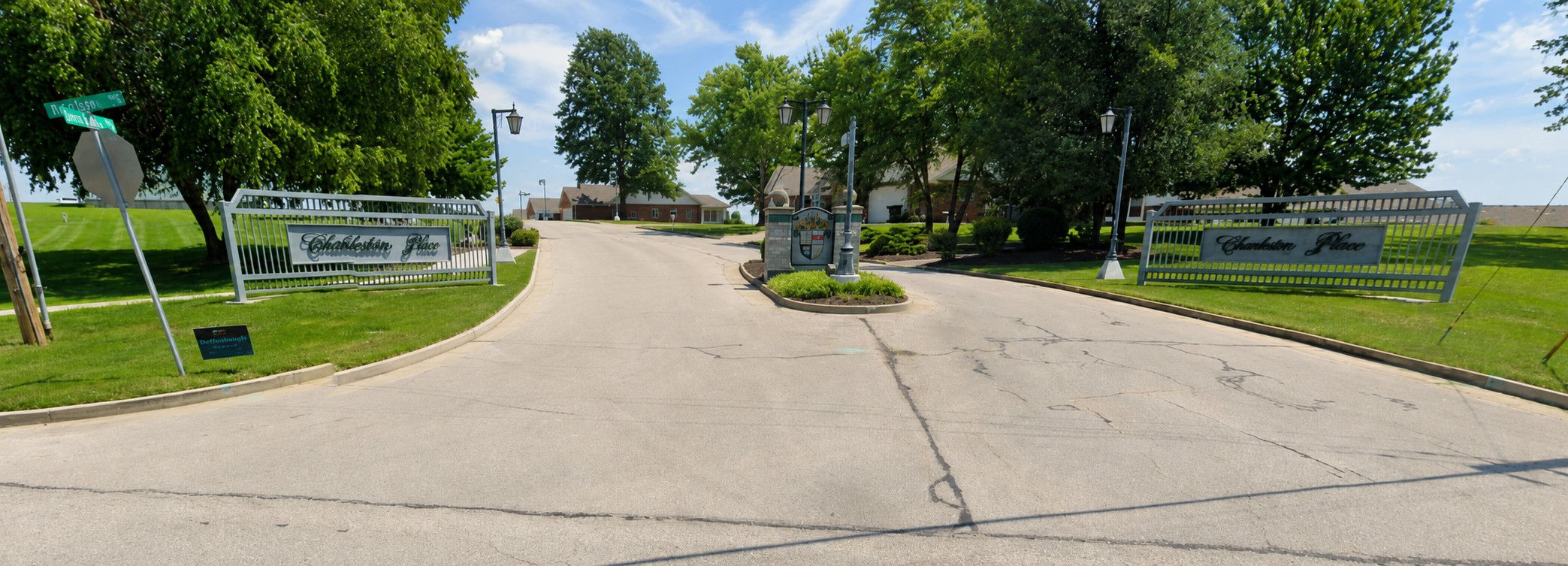
Welcome to Charleston Place HOA
An independent educational resource providing plain-English explanations of the 1994 Declaration, 2025 recorded amendments, Missouri law, and court decisions.
Our Mission
"Our mission is to provide homeowners with accurate, organized, and easy-to-understand information about Charleston Place. By making the governing documents, recorded amendments, Missouri statutes, and relevant court decisions available in one place, we hope to encourage transparency, responsible governance, and informed community involvement."
Residential Subdivision Overview
Charleston Place is a residential community located in Jefferson City, Cole County, Missouri. Established under the 1994 Declaration of Covenants, Conditions, and Restrictions (CC&Rs), the community was designed to provide homeowners with an attractive, well-maintained neighborhood governed by a common set of standards.
The Declaration created the Charleston Place Property Owners Association (HOA), established the rights and responsibilities of property owners, and set forth procedures for maintaining common areas, architectural standards, assessments, and community governance under Missouri Nonprofit Corporation Law (RSMo Chapter 355).
Consequences of Unilateral Amendments
Unilateral amendments can have a significant impact on every homeowner because they may change the rights, responsibilities, and restrictions that apply to privately owned property without a homeowner vote. New amendments can affect how property is used, maintained, improved, or transferred and may lead to additional approval requirements, enforcement actions, or compliance costs.
Because restrictive covenants become part of a property's legal title, homeowners should carefully review any proposed or recorded amendments, understand the authority under which they were adopted, and remain informed about changes that may affect their property rights and the future of their community.
Covenant Comparison: 1994 Original vs. 2025 Amendment
| Category / Topic | Original Provision (1994 Document) | 2025 Recorded Amendment Provision | Key Impact & Changes |
|---|---|---|---|
| Fences | Fences allowed along rear lot lines only, subject to Architectural Control Committee (ACC) design and material approval. | Fences allowed along rear AND side lot lines with ACC approval. • Rear fences: Max 6 feet high. • Side fences: Max 4 feet high, set back at least 2 feet inside property lines, extended no further forward than rear building line. • No chain link fences allowed. |
Expanded & Restricted Opens side yards, but adds height/setback caps & total chain-link ban. |
| Chickens & Coops | No specific clause mentioning chickens or coops. (General pet rules applied). | Up to 6 chickens permitted. • Must be confined to coop (no roaming). • ACC must approve coop location, size, and appearance. • Cannot be visible from street or within 100 ft of neighboring residence. • Must be clean, odor-free, no roosters allowed. |
New Regulation Explicitly permits backyard chickens while setting strict 100ft setback & coop rules. |
| Garages & Doors | Required an attached 2-car side-entry garage. No height cap specified. | Garages must be attached 2-car or 3-car with side-entry doors (not facing street). • Garage door openings cannot exceed 10 feet in height without prior ACC approval. |
Updated Formally allows 3-car side-entry garages & adds 10-foot max door height limit. |
| Solar Panels | Not mentioned in original covenants. | Must be installed on the roof and comply with Missouri state law. | New Regulation Mandates roof-only placement for solar energy systems. |
| Home Businesses | Not explicitly mentioned in Section 5. | Must be registered with the ACC and conform to performance standards in the Jefferson City Zoning Code. | New Regulation Requires ACC registration and adopts municipal zoning standards into HOA rules. |
Missouri Case Law on HOA Amendments
When reviewing HOA covenant disputes, Missouri courts strictly interpret the language of the original Declaration. Click below to view case references:
Van Deusen v. Ruth
Courts must look strictly at the actual language of the amendment clause; an amendment provision does not automatically grant power to add brand-new burdens simply because it allows amendments.
Jones v. Ladriere
Struck down an amendment prohibiting construction where original rules allowed it, establishing that changing existing rules differs from adding entirely new property burdens.
Bumm v. Olde Ivy Development
Ruled that general language permitting rules to be "amended, repealed or added to" does not authorize imposing brand-new restrictions on property owners without unanimous consent unless clearly authorized.
Read Governing Documents Online Without Downloading
Select a document below to read directly inside your browser: